Wix has become a serious option for small business websites, and Wix sites can rank very well in Google. But Wix makes it so easy to build a beautiful site that many owners never do the SEO work that brings visitors. This guide brings everything together: how to plan a Wix site for search, the settings that matter, how to get indexed, how to rank locally and how to grow traffic with content. Each section links to a detailed guide if you want to go deeper.
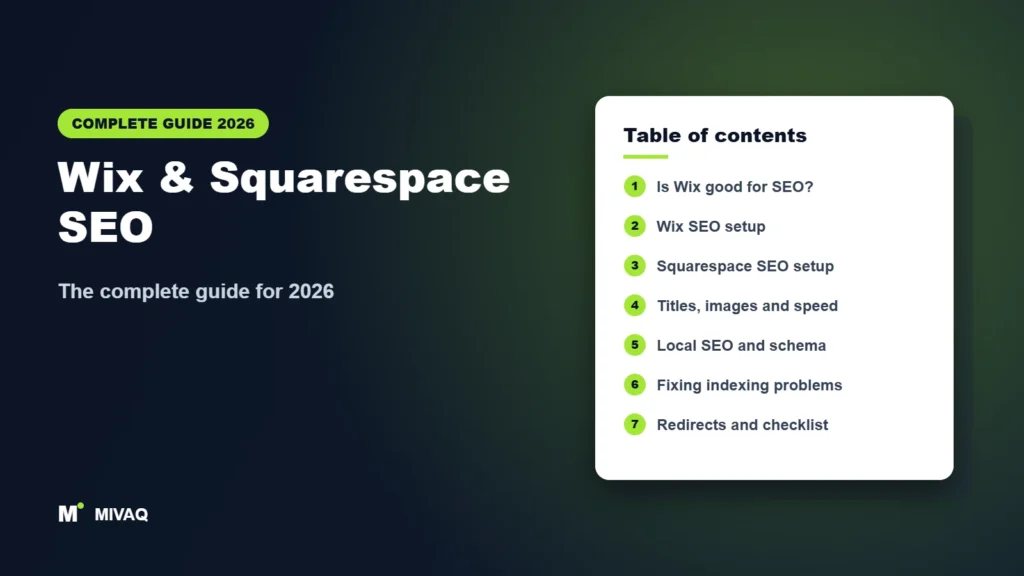
This article is part of our complete guide: Wix and Squarespace SEO: The Complete Guide (2026).
Part 1: Foundations
Connect your own domain and choose a Premium plan
A custom domain builds trust and is essential for long-term SEO. Connect it before you start optimising, so Google learns the right address from day one.
Plan your site structure
Structure decides what you can rank for. A strong small business structure looks like this:
- Homepage: targets your main service and location, summarises everything and links to key pages.
- Service pages: one for each main service, each with its own keyword.
- Location pages: only for main areas, with genuinely unique content.
- About, contact and reviews pages: trust and conversion.
- Blog: answers to customer questions, linked to services.
- Portfolio or case studies: proof of real work.
Research keywords
Find the phrases customers actually use, including service, location and problem-based searches. Map one main keyword to each page so pages do not compete with each other. See keyword research for small businesses and keyword cannibalisation.
Part 2: Setup
Complete the SEO Setup Checklist
Wix’s built-in checklist connects Google Search Console, submits your sitemap and guides you through homepage basics. Do it thoughtfully, with specific keywords. Our Wix SEO Setup Checklist walkthrough explains each step.
Review the SEO Settings panel
In SEO Settings you can set default title and description patterns for each page type (pages, blog posts, products, categories), control indexing for page types, edit robots.txt and manage structured data templates. Set sensible patterns so nothing is left as “Home | My Site”.
Complete Business Info
Name, logo, address or service area, phone and hours. Wix uses these in structured data and across apps.
Part 3: On-page SEO for every page
For each page, open its SEO settings and work through:
- SEO title: keyword first, location if relevant, brand at the end, about 60 characters. See title tags.
- Meta description: a clear reason to click, about 150 characters. See meta descriptions.
- URL slug: short and descriptive.
- H1 heading: one per page, describing the page clearly. See H1 tag fixes.
- Content: enough useful text to answer the searcher’s question, with H2 and H3 subheadings.
- Images: compressed, named and described. See Wix image SEO.
- Internal links: to related services, posts and contact. See internal linking.
- Indexing: make sure “Let search engines index this page” is on for pages that should rank.
For a printable version, use our on-page SEO audit checklist and the original Wix SEO checklist.
Part 4: Getting indexed
Use Google Search Console to confirm Google can find and index your pages. Check the Page indexing report monthly and inspect important URLs after publishing. If pages are missing, our guide to a Wix site not showing on Google lists twelve causes and fixes. For individual statuses, see Crawled – currently not indexed and Discovered – currently not indexed.
Part 5: Technical health
Speed and Core Web Vitals
Wix handles hosting, but your design choices decide speed. Lighten hero sections, compress images, remove unused apps and limit animations. See Wix speed optimisation.
Mobile experience
Google uses the mobile version of your site for indexing. Check every page in the Wix mobile editor and on a real phone.
Redirects
Whenever you rename or remove a page, add a 301 redirect in the URL Redirect Manager. See Wix 301 redirects.
Structured data
Wix adds schema for blog posts, products and events automatically. Add LocalBusiness or Service markup where relevant. See Wix structured data.
Part 6: Local SEO
For local businesses, local signals often matter more than anything else. Optimise your Google Business Profile, collect genuine reviews, keep your name, address and phone consistent, and build service pages for your main areas. See Wix local SEO and Google Business Profile optimisation.
Part 7: Content that brings visitors
Service pages capture people ready to buy. Blog posts capture people researching a problem, comparing options or planning a project. Both matter. Publish helpful posts that answer specific questions, show real experience and link to your services. See Wix blog SEO.
Part 8: Links and reputation
Links from other relevant websites remain one of the strongest signals of trust. Focus on genuine sources: suppliers, partners, trade associations, local organisations, press coverage, and helpful content others want to reference. Avoid buying links.
Part 9: Measuring and improving
- Search Console: queries, impressions, clicks, positions and indexing.
- Wix Analytics: traffic sources, popular pages and conversions.
- Google Business Profile: calls, directions and website clicks.
Every month, find pages with high impressions but low clicks and improve their titles and descriptions, and find pages ranking in positions 8 to 20 and strengthen their content and internal links. These are usually the fastest wins.
Wix SEO for ecommerce stores
If you sell through Wix Stores, product and category pages need the same care as service pages. Write unique product descriptions instead of copying manufacturer text, use several high-quality images with alt text, and set clear SEO titles that include the product name and its main attribute. Group products into meaningful categories with a short introduction on each category page. Keep out-of-stock products live if they will return, and redirect discontinued products to their closest replacement. Wix adds Product structured data automatically, which can help your listings show price and availability in search results.
Wix SEO myths
- “Wix is bad for SEO.” Outdated. Modern Wix handles technical basics well. See Wix vs WordPress SEO.
- “Completing the checklist is enough.” It is only the start.
- “More pages means more traffic.” Only if each page is useful and distinct.
- “SEO apps will do it for me.” Apps help with analysis; the work is still structure, content and links.
A 90-day Wix SEO plan
- Days 1–14: structure, keyword mapping, SEO setup checklist, Search Console, Business Info.
- Days 15–30: on-page optimisation for every page, images, redirects, mobile checks.
- Days 31–60: Google Business Profile, reviews, citations, first four blog posts.
- Days 61–90: review Search Console, improve near-miss pages, add internal links, earn a few genuine links.
Working with an expert
If you would rather focus on your business, our Wix and Squarespace SEO service follows this exact framework. We have applied the same principles across the projects in our case studies, from local services like K9 Daycare to creative businesses like Heather Elizabeth Photography.
Get expert help
Want a professional to take your Wix site through this plan? We audit, prioritise and implement the changes, and report progress in plain English. Start with our Wix & Squarespace SEO service, browse real client results in our case studies, or contact us for a free, no-pressure review of your website.
Frequently asked questions
Can a Wix website rank on the first page of Google?
Yes. Many Wix sites rank on page one, especially for local and niche searches, when structure, content and local signals are strong.
How long does Wix SEO take to work?
Expect early improvements within one to three months and stronger results over three to six months, depending on competition.
Do I need an SEO app on Wix?
No. Wix’s built-in tools plus Google Search Console cover the essentials.
What is the most important Wix SEO setting?
Making sure pages are indexable and each page has a unique, specific SEO title. Then content and local signals.